Tag: Nanogold(TM)
-

Detailed Report: Mass Reduction Mechanism in IPRI.Tech Plasma Processing Technology
Introduction At IPRI.Tech, the International Plasma Research Institute, we are pioneering a transformative approach in mineral processing through our proprietary Ultra High Temperature Pyrometallurgy™ (UHTP™) technologies. Our flagship processes, Plasma Assisted Digestion™ (PAD™) and Plasma Accelerated Oxidation™ (PAO™), leverage ultra-high temperatures to enable chemical-free, green, and efficient recovery of valuable metals from complex and refractory…
-

Comprehensive Report on Amorphous Gold
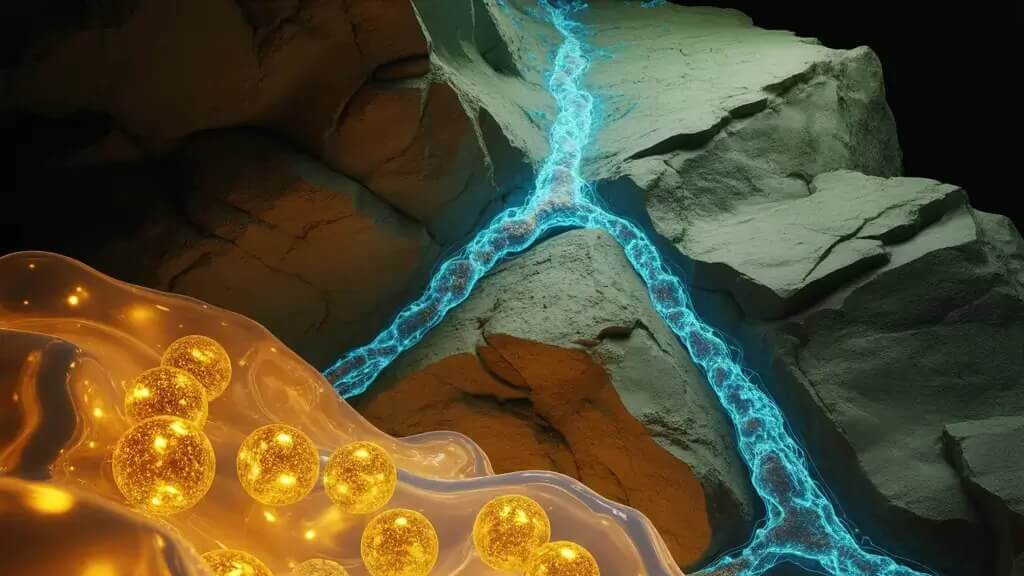
Origins and Formation Amorphous gold is a distinctive form of gold mineralisation characterised by the presence of nanoscale gold particles that lack a well-defined crystalline structure. These particles exist in a disordered, non-crystalline, or colloidal state, often associated with amorphous silica gels or carbon-rich phases. Amorphous gold primarily forms in orogenic (lode) gold deposits and…
-
Invisible Gold and Platinum Group Elements in Sulphide Minerals: A Detailed Exploration of Their Occurrence and Impact on Gold Deposits
The mining industry is increasingly encountering challenges as the supply of easily accessible, high-grade gold deposits diminishes. Many of today’s economically viable deposits contain precious metals in forms that are difficult to detect and extract. Among these, “invisible” gold and platinum group elements (PGEs) are particularly problematic. These metals are not present as free particles…
-
Recovering the Un-Recoverable – Nanogold™ – Refractory Entrapped Gold
Geologists often face significant challenges when it comes to the recovery of gold from refractory ores. These ores, which contain gold particles locked within sulphide minerals or organic carbon, typically yield lower recovery rates using traditional methods like cyanidation. While existing technologies such as roasting, bio leaching, and pressure oxidation have improved recovery rates to…