Abstract
A set of post-treatment samples from a plasma-based pre-treatment process were analysed for gold, silver and platinum-group metals (PGMs). Standard laboratory digestion and atomic absorption analysis showed marked increases in detectable precious metals in plasma-treated material versus untreated fractions. Quality control results were within accepted limits. Findings indicate the plasma process can liberate precious metals that are otherwise locked in refractory host phases, producing multi‑fold increases in detected concentrations in this test series.
Sample handling and methods
- Nine material splits were submitted; eight were analysed (one omitted by request).
- Samples included original feed, magnetic and non‑magnetic separates, and tailings.
- Laboratory digestion used iterative acid treatments (HCl/HNO3 with staged H2O2 additions) under controlled reflux; final extracts were analysed by atomic absorption with appropriate dilutions.
- Blanks, spikes, duplicates and certified reference materials were run; recoveries and precision met laboratory acceptance criteria.
Key analytical observations
- Magnetic fractions from plasma‑treated material contained the highest concentrations of precious metals across the dataset.
- Example ranges (rounded): gold tens of ppm (e.g., ~12–25 ppm), silver tens of ppm to ~60 ppm, and elevated values for several PGMs.
- Non‑magnetic fractions retained measurable gold and PGMs but generally at lower or more variable levels.
- Tailings exhibited negligible precious metal concentrations (at or below detection limits).
- Some sample duplicates showed expected analytical repeatability; CRM and spike recoveries were within ±10% (or tighter where certified), supporting data reliability.
Magnitude of enrichment attributable to plasma pre-treatment
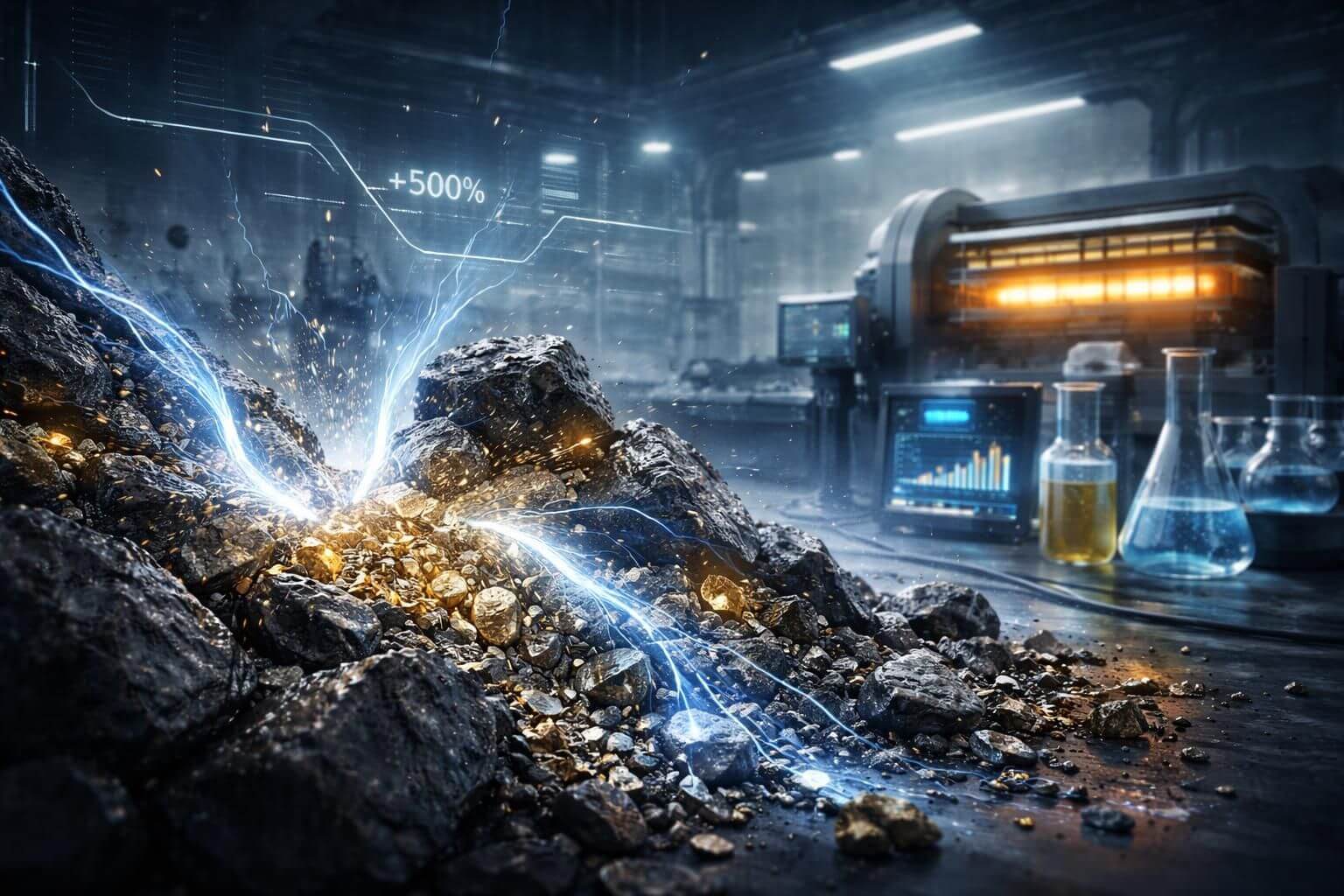
- Relative increases in detected precious metals in certain processed fractions versus the untreated head material exceeded several hundred percent in some cases (reported up to >500% for individual analytes in this study).
- Enrichment was most prominent in the magnetic separates, indicating that the plasma treatment altered the host phase(s) so metals became measurable in acid digestions that previously under‑reported them.
Interpretation of mechanisms
- The pattern of results is consistent with liberation of metals that were previously encapsulated in refractory mineral matrices (e.g., sulfides, silicates, tellurides, or other complex phases).
- Plasma energy/thermal/chemical effects likely altered mineral structures, broke encapsulating matrices, or transformed metal speciation to forms more amenable to acid digestion and assay.
- The strong reduction of metal content in tailings supports that liberation was effective rather than simply redistributing metal into unrecoverable fines.
Implications for assay and processing
- Assays on untreated refractory ores may substantially underestimate contained precious metals where encapsulation is present. Plasma pre-treatment can expose additional metal that standard digestion methods miss.
- For ores showing similar behaviour, plasma pre-treatment could materially improve both analytical recoveries (more accurate resource estimates) and potentially downstream metallurgical recoveries if liberated metal is amenable to conventional extraction routes.
- Laboratory QC supports that results are analytically valid for these samples, but scale‑up and reproducibility remain to be demonstrated.
Recommended next steps (technical)
- Replication: conduct duplicate test campaigns on the same material and on additional, compositionally varied ore samples to demonstrate repeatability.
- Comparative head‑to‑head tests: run the same samples through established refractory pretreatments (pressure oxidation, roasting, bio‑oxidation, fusion/HF digestion) alongside plasma pretreatment to quantify relative liberation and recovery performance.
- Mineralogical before/after characterisation: apply SEM/BSE imaging, LA‑ICP‑MS, EPMA, QEMSCAN/XRD to document the host phases, the nature of encapsulation, and the physical/chemical changes induced by plasma.
- Metallurgical recovery tests: perform leach and concentration tests on plasma‑treated material to show that liberated metal is recoverable at laboratory/pilot scale and to establish mass balances.
- Process scale‑feasibility: evaluate energy, reagent, environmental and capital implications versus alternative pretreatments.
Conclusion
Analytical data from this test series indicate that plasma pre-treatment can liberate significant quantities of gold, silver and PGMs from refractory hosts in materials where conventional assays and digestions under‑report contained metal. Observed enrichments—up to multiple‑hundred percent in specific cases—are substantial and warrant systematic follow‑up: replicated testing, controlled comparisons with established pre-treatment methods, detailed mineralogical confirmation of liberation mechanisms, and metallurgical recovery work to validate economic and operational viability.
Further Work
Contact IPRI today to improve your resource valuation.
Leave a Reply